
Debut and Founders:
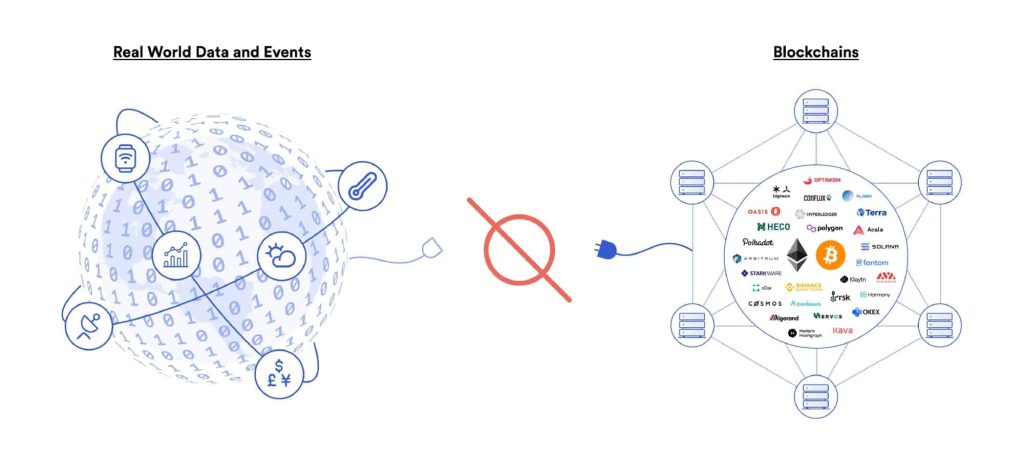
Chainlink was created to address the “oracle problem” in blockchain technology. It debuted in 2017, founded by Sergey Nazarov and Steve Ellis. The project aims to bridge the gap between smart contracts on the blockchain and real-world data.
Problem Addressed:
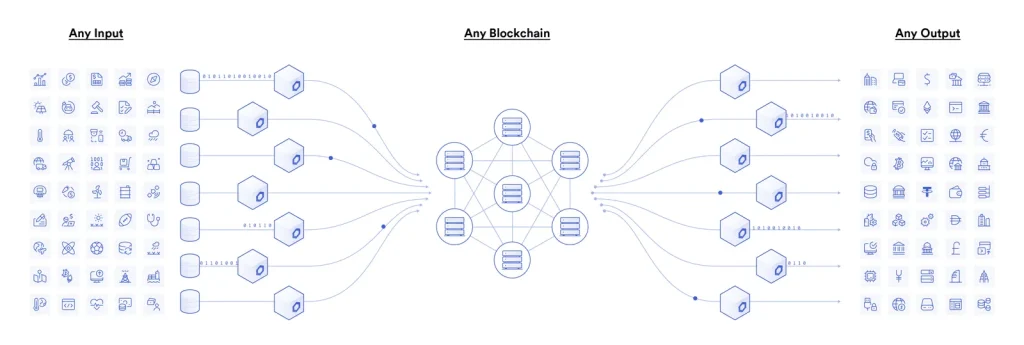
Unlike Deja Vu, Chainlink focuses on providing reliable external data to smart contracts. Its decentralized oracle network ensures that blockchain-based contracts have secure and accurate information from the outside world, which is crucial for many real-world use cases.
What oracle problem is Chainlink solving?
- Traditional Oracle: A centralized oracle providing price data could be manipulated or become a single point of failure. If the oracle reports incorrect price data due to a hack, error, or malfeasance, it could lead to incorrect margin calls, unfair liquidations, or even system insolvency.
- Chainlink Solution: Chainlink’s decentralized oracle network aggregates data from multiple independent oracles and sources, reducing the risk of incorrect data. By doing so, it ensures a more accurate and reliable price feed, minimizing the risks associated with centralized oracles.
Insurance Smart Contracts Example:
Suppose there’s a blockchain-based insurance platform that provides crop insurance. The smart contracts on this platform need data about weather conditions to process claims. If there’s a drought or flood, affected farmers should receive payouts.
- Traditional Oracle: A single centralized oracle supplying weather data could be inaccurate or compromised, leading to incorrect claim processing. Farmers might not receive the payouts they deserve, or the insurance platform might suffer financial losses due to false claims.
- Chainlink Solution: Chainlink’s decentralized oracle network can fetch weather data from multiple sources, verify it, and provide a more accurate and tamper-proof data feed to the insurance smart contracts. This way, claims can be processed fairly and accurately, benefiting both the farmers and the insurance platform.
Through these examples, it’s evident that Chainlink’s decentralized oracle network addresses the Oracle Problem by reducing the risks associated with relying on a single, centralized oracle. By ensuring that smart contracts have access to reliable and accurate external data, Chainlink plays a pivotal role in the broader adoption and functionality of blockchain technology in real-world applications.
Token Price Evolution:
Chainlink’s native token, LINK, has seen substantial growth since its inception. The Initial Coin Offering (ICO) price for Chainlink’s LINK token was $0.11 USD at the time of its creation. The ICO managed to raise $32,000,000 USD by selling approximately 290,909,091 Chainlink tokens at this price. This pricing information is consistently reported across multiple sources, reaffirming the ICO price of $0.11 per LINK token (Coindesk source). From an initial price of around $0.10 in 2017, it reached an all-time high of over $50 in 2021. However, like many cryptocurrencies, its price can be volatile.
Notable Investors:
According to Chainlink.com website it notable investors include venture capital firms like Framework Ventures and blockchain-focused investment firms such as Parafi Capital.
Future Forecast:
Chainlink’s future looks promising as the demand for decentralized oracles and real-world data integration with blockchain continues to grow. Additionally, partnerships with other blockchain projects and continued development of the Chainlink network can potentially lead to further adoption and price appreciation.
Blockchain Oracle Use Cases
source: Chainlink Website
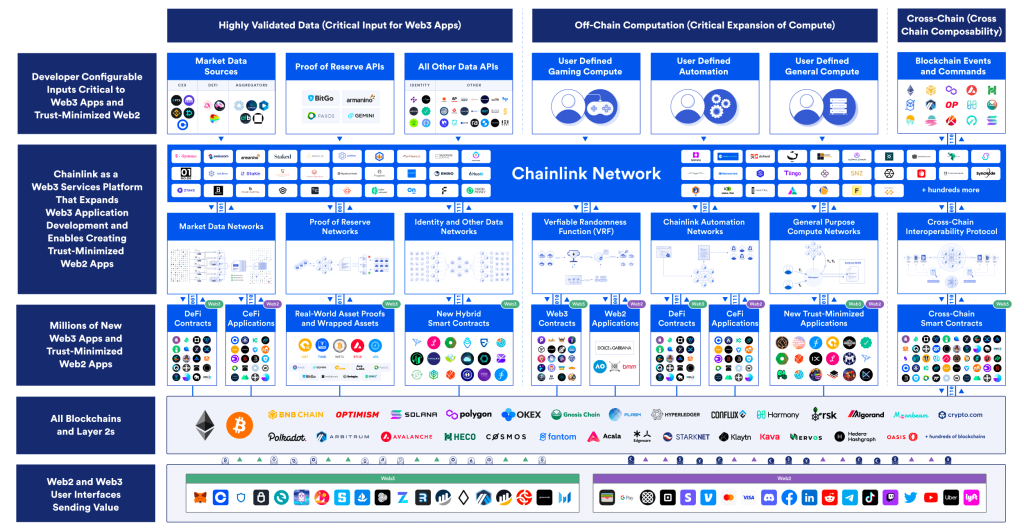
- Decentralized Finance (DeFi): Oracles provide crucial financial data to decentralized platforms, aiding in determining borrowing capacities and ensuring market prices are accurately reflected in activities like asset liquidation and synthetic asset valuation.
- Dynamic NFTs and Gaming: By offering verifiable randomness and real-time external data, oracles enrich the functionality of NFTs and on-chain gaming, enabling dynamic value, appearance alterations, and engaging, unpredictable gameplay elements.
- Insurance: Input oracles verify insurable events for smart contract-based insurance processing, while output oracles enable claim payouts via traditional or blockchain networks, thus modernizing insurance operations.
- Enterprise: Cross-chain oracles serve as a secure middleware, enabling enterprises to interact with multiple blockchain networks effortlessly, promoting swift integration and deployment of smart contract services without extensive resource expenditure.
- Sustainability: Oracles supply environmental data to hybrid smart contracts promoting green practices. They play a pivotal role in validating and incentivizing sustainable actions, supporting carbon credit systems to mitigate climate change impacts.